
Resources for the Soccer Player
Our Blogs, Audio and E-Books are dedicated to the development of Soccer Players Performance with science backed articles and research.

Free Resources
We offer Free E-Books, Guides and Workouts for Aspiring Footballers
The Travel Playbook
The Travel Playbook is a practical guide designed to help athletes maintain recovery, mobility, and performance while traveling for matches, tournaments, and team events. Long periods of sitting, disrupted sleep schedules, and inconsistent routines can negatively impact readiness and increase injury risk.

It's Not Your Hamstrings
It's Not Your Hamstrings challenges the common belief that hamstring injuries are solely a hamstring problem. This guide explores how movement quality, force absorption, pelvic control, hip function, and sprint mechanics influence lower-body injury risk

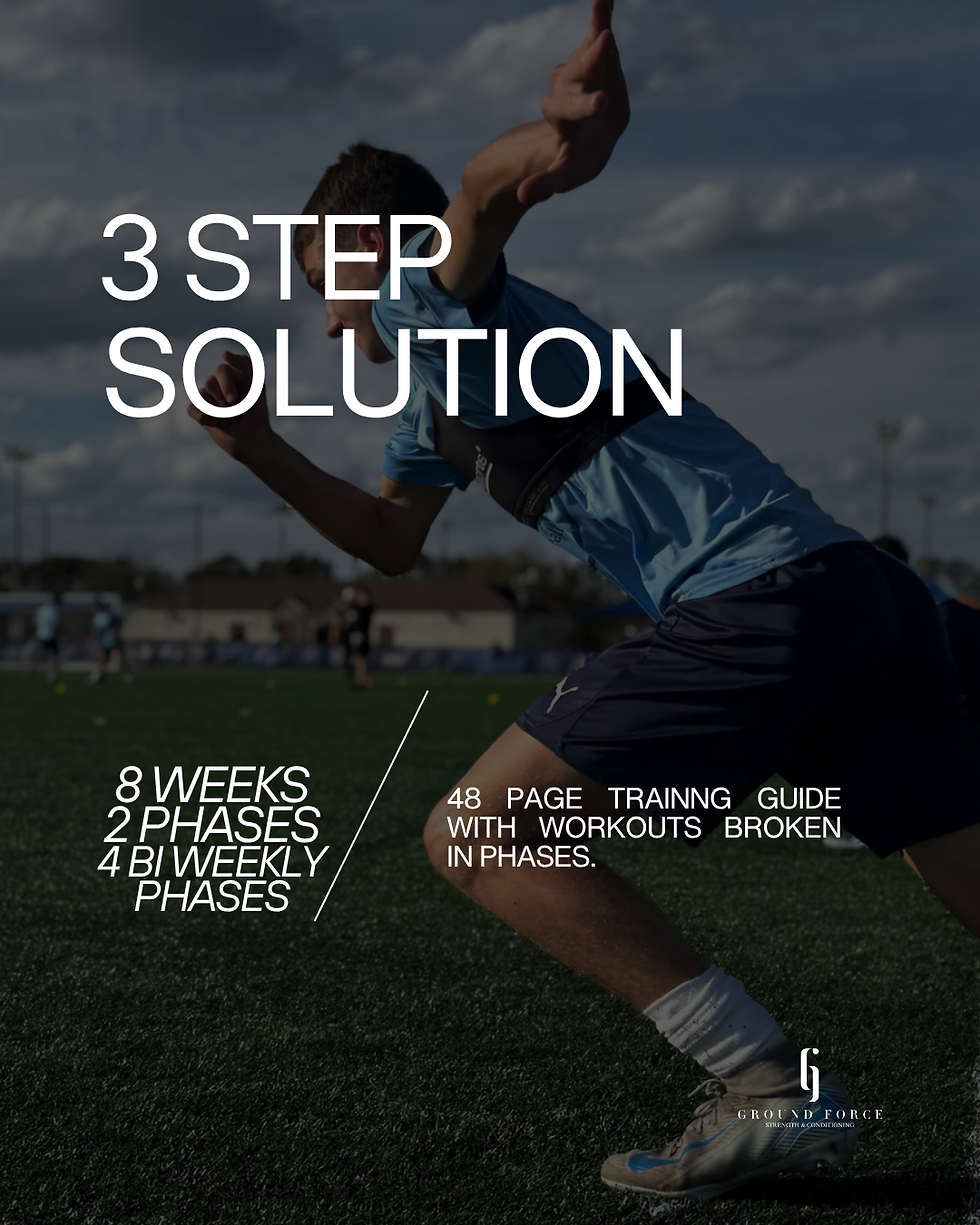
The 3 Step Solution
The 3 Step Solution is a 8-week acceleration development program designed to improve an athlete's ability to accept force, produce force, and redirect force. 4 Phases Each Two Weeks.
Coming Soon
Upcoming Projects! Stay Tuned


Travel Is Load: How Soccer Players Can Manage Away Weekends Without Giving Away Performance


Using Extensive Plyometrics In-Season for Soccer Players
What the Ground Gives Back: Natural Grass, Artificial Turf, and Energy Exchange
What the 5-10-5 Really Tells Us About Change of Direction
From Running Shoes to Soccer Cleats: Why the Transition May Increase Achilles and Calf Injury Risk
Prepubertal Sprint Development: What the Science Says About Isometrics, Loaded Running and Sprint Mechanics
Fascia as the Primary Source of Athletic Performance: Separating Biological Reality from Popular Narrative
Force Transmission, Connective Tissue, and Athletic Performance for Soccer Players
Why Generic High-Intensity Conditioning Models May Not Align With Modern Soccer Performance Development
Hamstring Strains in Soccer: A Deceleration Problem Disguised as a Speed Issue
Accumulation in Soccer: Why Objective and Subjective Data Must Coexist to Drive Readiness and Performance


How We Use Movement Screenings Inside the Ground Force Method for Academy to Pro Soccer Athletes
Why Lifting Heavy Still Matters for Athleticism: The Science of Muscle Memory and the Myth of Fascia-Only Performance


Competitive Drive vs Competitive Discipline: What College Coaches Really Recruit


THE MATCH-WEEK MICROCYCLING BLUEPRINT FOR YOUTH SOCCER (MD+1 → MD-1): HOW TO STOP GUESSING AND START ARRIVING READY
Fixture Congestion in Girls’ High School Soccer: What Cortisol, Recovery Timelines, and Injury Data Really Suggest
Jump Training Isn’t Always Plyometrics: The Differences That Change Performance
Training Isn’t Just What You Do—It’s When You Do It: A Match-Based Weekly Plan for Soccer Players
From Sensory Input to Structural Adaptation: Why Proprioception, Balance and Neuromuscular Control Build Fascia — Not the Other Way Around
Why Balance Might Be the Most Overlooked Assessment in Soccer